Soil: Fine, smectic, thermic. Ustic Epiaquert
Soil Description. The Ustibuck soil series is the principal hydric soil on this wetland type. Ustibuck soils are formed in clayey sediments that are deposited on low gradient backwater areas of flood plains on large stream systems. Because water stands nearly motionless for long periods, the clayey sediment has time to settle out in thick layers of clays with thinner strata of loamy and sandy materials. The depositional materials that form this soil are generally red sediments from Pleistocene age materials.
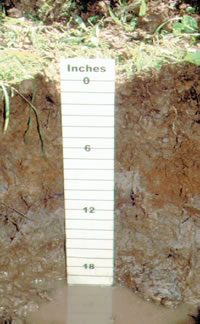
Soil Profile
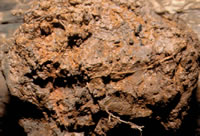
A: 0 to 8 inches, reddish brown (5YR 3/4) clay; moderate very fine blocky structure; many fine and medium roots; many (40%) medium and coarse yellowish-red (5YR 5/6) redox concentrations and many (45%) coarse gray (5YR 6/1) redox depletions.
B: 8 to 20 inches, gray (5YR6/1) clay; moderate medium blocky structure; common coarse roots; common fine and coarse yellowish-red (5YR 5/8) redox concentrations on ped faces.
Landuse. This wetland type is typically used for livestock water and recreation. The adjacent areas are typically used for woodland or when adequately drained are used for corn or soybean production, improved pasture or alfalfa hay.