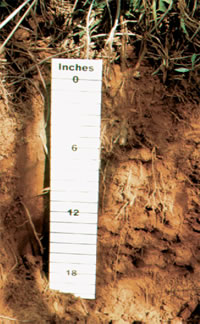
Soil: Coarse-loamy, mixed, superactive, nonacid, thermic.
Oxyaquic Udifluvent.
Soil Description. The Tribby soil series is the principal soil on this wetland type. Tribby soils formed in loamy to sandy sediments deposited on floodplains from adjacent eroded uplands. The depositional materials that form this soil are red sediments from sandstones and shales of the Permian geologic age.
Soil Profile
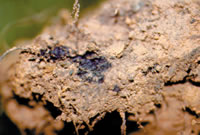
A: 0-6 inches, reddish brown (5YR4/3) fine sandy loam; weak granular structure; few (<5%) fine yellowish red (5YR 4/6) redox concentrations; many fine and coarse roots.
C: 6-20 inches, yellowish red (5YR 4/6) fine sandy loam; weak fine granular structure; few (<5%) fine faint yellowish red (5YR 5/6) redox concentrations.
Landuse. This wetland type is typically used for livestock grazing. Areas are sometimes drained by channelization, and improved pasture grasses like
Bermuda grass and fescue are established. The areas adjacent to these soils are mostly forested with a post oak/blackjack oak community. Adjacent areas are also grazed with very little crop production in close proximity.